
 EN
EN
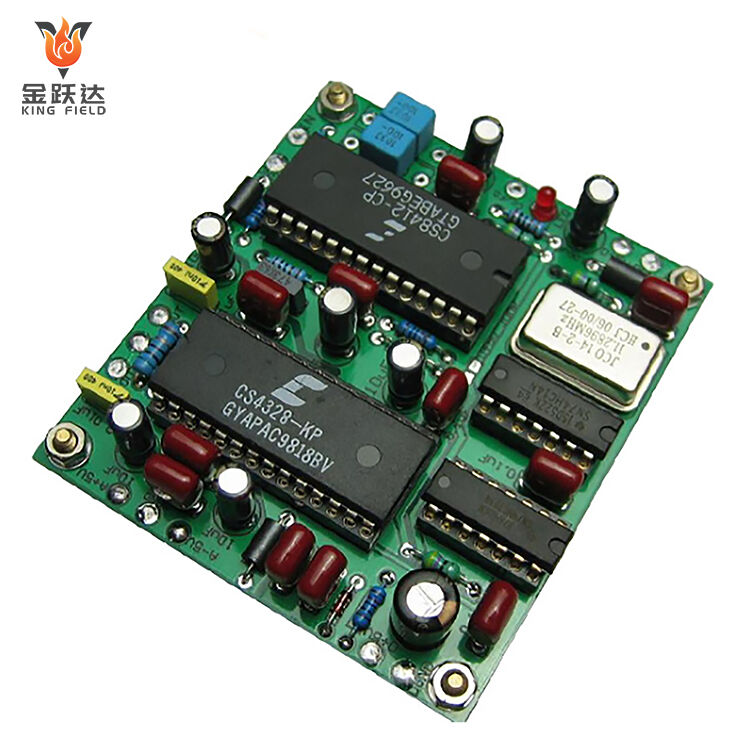
In the readiness for this SMT period, automatism production line, small size of electronic equipment organization, the traditional assembly process is on the decline, many people think. But for products with high requirements of durability, mechanical strength, and long term stability, hole soldering PCB technology still has importance. Through hole soldering is still far from obsolete, rather, it forms the basis of high reliability applications in many industries.
Summary to Through Hole Soldering PCB Technology
Through-hole PCBs are and Missiles are also forced to pass through the PCBs as normal PCBs do, and then the last one is soldered at the back side of the PCB. Between the component and the PCB, a good physical and electrical bond is established.
Components however are not mounted directly on surface pads as in SMT, but through the board in through hole, offering greater depth anchoring and mechanical strength. This fundamental architectural difference is why through hole soldering pcb assemblies are still used for mission critical electronics.
Mechanical Strength to Endure Harsh Environments
The mechanical strength that through hole soldering PCB assemblies provide is one of the biggest benefits. The components are physically locked on to the board, which makes them more rugged in case of vibration, shock, and other mechanical forces.
This type of strength is crucial in the aerospace, automotive electronics, industrial machinery, railway system, and power equipment and the like. In such applications, PCBs are routinely subjected to vibration, temperature changes, and shocks. Through hole soldering makes components secure and electrically reliable even when subjected to the harshest of conditions, when surface-mounted components may crack, become detached, or suffer from solder fatigue.
Improved Reliability in High-Power and High-Voltage Applications
Through hole soldering technology pcb is very good at high current and high voltage. Transformers, large capacitors, inductors, and power transistors are some of the components which get hot and have large electrical loads.
Since the leads are wider and the joint area is greater in through-hole assemblies, they are capable of carrying more current and dissipating more heat.
Power supplies don’t have to prove themselves above and beyond – reliability is assumed, and for good reason, as their duties in life and in critical infrastructures they quietly fulfill would require near constant uptime. The whole solder joint is strong with through hole soldering and this means less chance of heating up, arcing or failing prematurely, and that is why the products made by through hole process have good service-life and stable performance.
Simplifies Inspection, Maintenance and Repair
Serviceability is also a reason why that remains important in through hole soldering PCB. Through hole parts are easier to see, to electrically test, and to replace. This is especially beneficial for high-reliability products, which are expected to run for many years, but might be maintained or repaired occasionally.
Risk or high impact on business continuity in defense, med equip or industrial automation: dust contamination is a leading cause of equipment failure. Through-hole components are less susceptible to dust contamination than surface-mount components.
Through hole soldering enables technicians to rapidly identify problems and change out bad parts without destroying other circuits, which results in extending the life of the product.
Reliable Processing for Safety-Critical Applications
High-reliability products run in safety critical environments and they can’t fail. Medical devices, air traffic control systems, military electronics and energy systems all run on proven technologies whose performance is well understood.
Through Hole Soldering PCB processes have been applied across the decades with tried-and tested norms and methodologies. This lengthy reliability history makes the through-solder-hole process the default option whenever compliance, certification , and long-term stability must be ensured.
Due to the mechanical and electrical strength of through hole technology, many safety standards continue to prefer or mandate, at least in some instances, the use of through hole components in safety-critical applications.
Modern Manufacturing Is Being Enhanced, Not Supplanted
What many do not fully realize is that through hole soldering is not replacing SMT, it is augmenting it. Advanced high-reliability electronics are now commonly built using hybrid assemblies that utilize SMT for small low-power components and through hole soldering for connectors, power devices, and components subject to high stress.
A good fabricator knows how to combine these technology options to provide the best performance, cost, and reliability. The company specializes in high-end PCB assembly, through hole soldering PCB services, pcm assembly, SMT assembly, and mixed-technology assembly.
King Field enables manufacturers to select the appropriate process for every part and build the products that achieve stringent reliability and performance requirements.
Why Through Hole Soldering PCB Is Valuable Till Today
Although the pace of technological change is astounding, the fundamental requirements of high-reliability products remain the same. They still need strong mechanical bonds, reliable electrical performance, superior thermal management, and long-term reliability.
Through hole soldering PCB technology is still the best choice for all of your multilayer board requirements.
As the industry pushes for smarter, more powerful, and more reliable electronics, through hole soldering still remains a necessary part of the manufacturing toolkit. Its contribution to product integrity and safety in devices such as this makes it essential for use in any place where a failure cannot be afforded.
So why is through hole soldering still so important for high reliability products? The reason is its unparalleled mechanical strength, better power handling, ease of rework, and proven field reliability in harsh environments.
Surface mount technology now dominates in consumer electronics, but through-hole soldering is still vital for industries where reliability is more important than size.
With a seasoned partner like King Field, producers are able to fully embrace the advantages of through-hole soldering PCB technology, ensuring that their electronics will be rugged enough to stand the test of time, no matter what they are put through.
Table of Contents
- Summary to Through Hole Soldering PCB Technology
- Mechanical Strength to Endure Harsh Environments
- Improved Reliability in High-Power and High-Voltage Applications
- Simplifies Inspection, Maintenance and Repair
- Reliable Processing for Safety-Critical Applications
- Modern Manufacturing Is Being Enhanced, Not Supplanted
- Why Through Hole Soldering PCB Is Valuable Till Today