
 EN
EN
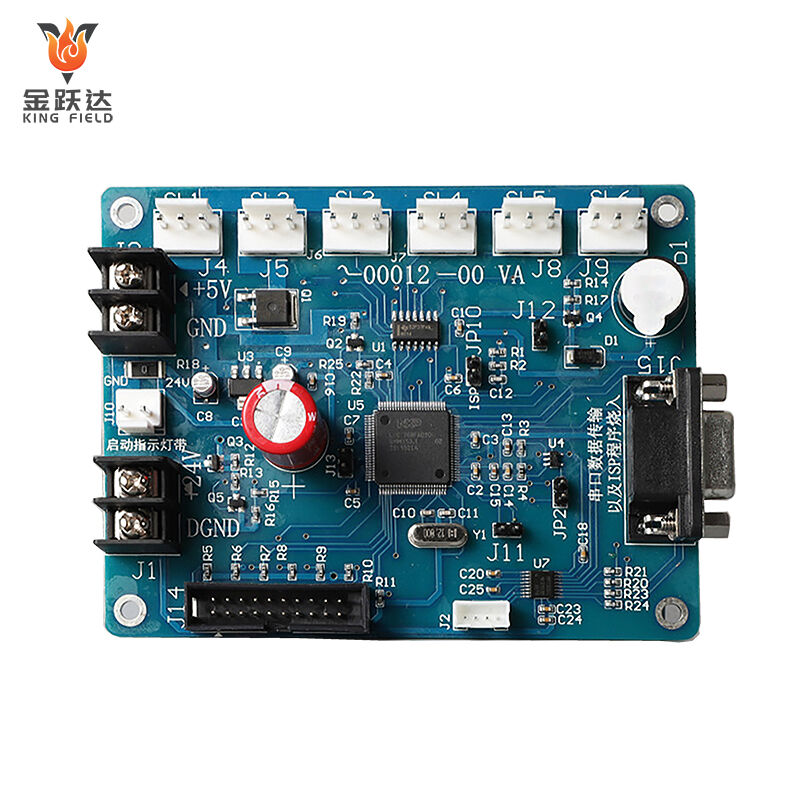
In an ever-evolving technology world, speed is often the secret to success in the market. For hardware making companies the path from a concept to real product is quite complex as it has to go through design validation, component sourcing, pcb fabrication, assembly, testing, and iteration. Now, turnkey prototype assembly is a game-changer. Turnkey prototype assembly by uniting several stages of hardware development into one, a single, coordinated service, significantly speeds up the process and at the same time lowers the risk and cost.
What is Turnkey Prototype Assembly?
Turnkey prototype assembly is a complete fabrication method of a prototype whereby one owner takes care of the entire prototyping process starting from the purchase of the raw materials up to the final assembly and testing. Engineers and product managers rarely have a chance to exult in such a situation where they no longer have to face problems of coordinating different vendors for PCB fabrication, component sourcing, SMT assembly, and quality inspection. They only call their one and only partner who gives them a prototype ready for testing.
Such a “one-stop” business model gets rid of a lot of the inefficiencies that are inherent in the traditional hardware development process, especially during the initial stages of prototyping when there are frequent changes in designs.
Faster Time-to-Market Through Streamlined Coordination
Speed is one of the biggest perks of turnkey prototype assembly.Usually, managing different suppliers leads to communication errors, conflicts of schedule, and delays due to missing or wrong components. On the other hand, if you have a turnkey partner, these issues are all in one place.
The assembly facility is the main point of contact throughout the whole production line; therefore, the design, sourcing, and manufacturing coordination go smoothly without any problems. Availability of components is always checked before play, if there is a need, alternatives are proposed, and production schedules are aligned with assembly timelines. Such a fully integrated work process can significantly reduce prototype lead times from several months down to just a few weeks or even days.
Lower Engineering Overhead and Internal Workload
Hardware teams are usually swamped with work, particularly in startups or R&D-focused companies. The work of procuring materials, validating part numbers, managing BOM revisions, and monitoring logistics can absorb a lot of engineers' time that should be primarily dedicated to innovation.
Going for turnkey prototype assembly means that this entire operation load gets shifted to skilled manufacturing professionals. Engineers are free to spend their time on design optimization and functional validation whereas the assembly partner is taking care of procurement, inventory management, and production planning. For instance, King Field helps their clients by reviewing the BOM, spotting potential supply risks, and making sure that the components meet the performance as well as the reliability standards—thus sparing the engineering teams from countless hours of work.
Improved Design Iteration and Faster Feedback Loops
Rapid iteration is essential in a situation where the development of hardware is in progress. Frequently, it is the early prototypes that disclose the flaws in design, issues with signal integrity or heat dissipation thus requiring very quick changes. Turnkey prototype assembly facilitates the acceleration of the build-test-revise cycles by making the time in between different versions almost negligible.
Because it is one and the same partner who will take care of the subsequent prototype runs, the design changes can be done easily without the need to re-educate new suppliers or go through a new cycle of onboarding. Sample parameters, testing methods, and quality standards have already been determined, thus the updated prototypes can directly go into production. This is why the repetition of cycles is significantly shortened and the team gets to the final design quicker.
Cost Control and Risk Reduction
At first glance, turnkey services may seem to be pricier, however, it is highly likely that they lower the total development costs. The fragmented way of sourcing increases the chances of mistakes such as ordering the wrong parts, having an excessive amount of inventory or grabbing incompatible components. Besides that, delays and rework cases are other types of costs levied.
Turnkey prototype assembly comes with certain a professional supply chain management and process control that cuts down the risks mentioned above. Skilled providers know how to make full use of their long-established supplier relationships thus they are able to procure components at a reasonable cost and spot the coming problems at an early stage. At the same time, they are also standardizing the procedures of assembly and inspection that thus minimizes the chances of defects and failures which can, in turn, lead to the schedule of testing being interrupted.
Enhanced Quality and Reliability from Day One
Quality of the prototype is of great importance. If a prototype is substandard as a result of bad assembly or low-quality components, it will most likely lead to misleading experiments and the teams will have to debug the manufacturing issues while the original design flaws will stay unfixed. A trustworthy turnkey prototype assembly partner is always there to ensure that the prototypes perfectly match the designated performance.
Turnkey providers have the necessary facilities for in-house quality control, functional testing, and engineering support and thus can provide their customers with prototype samples that are almost production-ready ones. Among others, King Field puts a special emphasis on process stability and early quality verification, thus customers can gain trust in their designs long before scaling up to mass production.
A Strategic Advantage for Modern Hardware Teams
With the increasing complexity of hardware products and the ongoing shortening of market windows, turnkey prototype assembly has ceased to be just a matter of convenience and, in fact, it has become a real strategic advantage. By shortening development life cycles, lightening the internal workload, and enhancing the quality of prototypes, unstoppable machines that are turnkey solutions become for companies the means of innovating faster and gaining a competitive edge more effectively.
If organizations aim to go from the idea to the market-ready product with as little friction as possible, King Field, an experienced turnkey prototype assembly provider, is the one with whom partnership can be a winning move on the road to success. In a world where speed and accuracy are two of the main winning factors, turnkey prototype assembly is an instrumental accelerant of smart and fast hardware development.