
 EN
EN
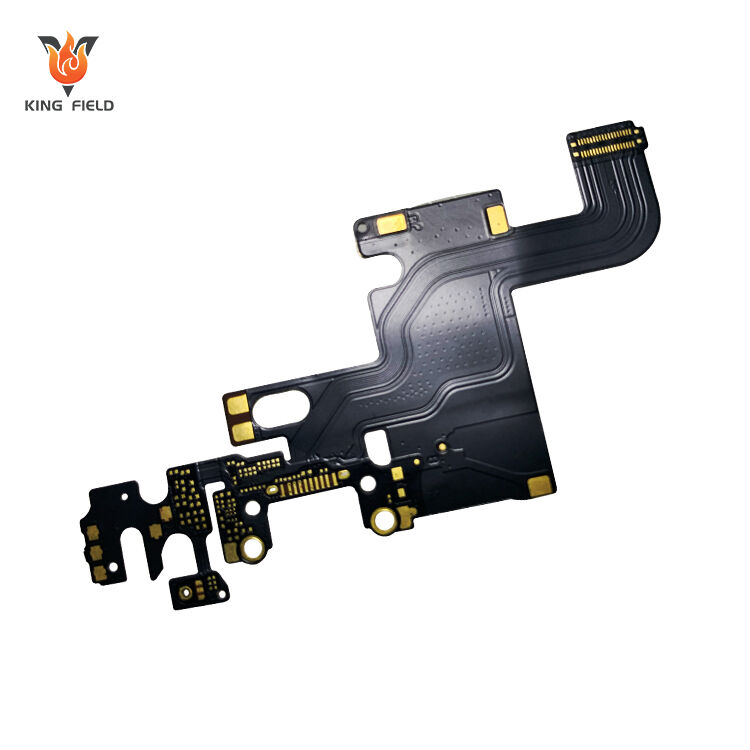
Flexible electronics significantly influence today’s technologies. Wearable gadgets, medical apparatus, high-tech cars, and small consumer electronic items all utilize flexible printed circuit boards (FPCBs) that give engineers the ability to design light, small, compact, and highly reliable electronic systems.
Nevertheless, achieving a consistently high soldering quality of flexible printed circuit boards is a challenge that requires a combination of specialized soldering techniques intended for this purpose, material handling with great care, and process control done at an exceptionally high level of precision.
Firstly, flexible PCBs, in comparison with rigid ones, are not only thinner and more susceptible to heat but also more prone to deformation. Secondly, the above features force manufacturers to invent their own customized soldering ways that they can absolutely trust both in terms of durability and performance.
The Unique Soldering Issues of Flexible PCBs
The challenge of soldering flexible printed circuit boards (PCBs) is, in part, due to several issues:
- Heat sensitivity – The very thin layers could be bent or their properties changed if the heat is too high.
- Mechanical stress – When the board is physically bent, the points where solder is applied can break easily.
- Component alignment difficulties – The very thin flexible circuits are the easiest to be moved improperly during the assembly process.
- Moisture absorption – Some of the flexible materials can absorb moisture and this is one of the issues that can cause problems in soldering.
Because these factors cannot be ignored, it is obvious that a soldering operation should be arranged in such a way as to prevent the electrical function from being damaged while not physically damaging the PCB.
Temperature Control is Very Important
The ultimate guiding principle when soldering flexible PCB is to control the temperature with great accuracy in every step because, on the one hand, too much heat will cause the board's layers to separate or degrade and on the other hand, not enough heat will lead to the solder not bonding properly.
So as to deal with temperatures effectively, manufacturers:
- Use reflow ovens equipped with temperature profiles specifically designed for flexible PCBs.
- Allow heating/cooling cycles letting the board get accustomed to temperatures without stress.
- When soldering, they use metal alloys that have low melting points which keep the temperatures down.
- Have instrumentation for the continuous measurement of PCB temperature.
Companies like King Field carry out an accurate tuning of reflow profiles so as to get the right balance between solderability, stability of components, and protection of materials.
The Necessity of Special Equipment
Due to their flexibility, flexible PCBs are not suitable for usual assembly lines, so soldering fixtures and carriers are practically indispensable in the production process. They serve as a form of support for the board, both in terms of shape and the stage of the production process.
Some of the most common fixture types are as follows:
- Fixtures that can hold flexible circuits tightly without giving deformability to them.
- Producing custom fixtures specifically for a particular PCB pattern.
- Use of vacuum fixtures so the movement of the component can be limited during placement.
With their ability to hold flexible boards firmly, these tools substantially contribute to the improved precision and reliability of flexible PCB soldering processes.
The Importance of Solder Paste Application
As solder paste is the material used to mount surface-mount components, its efficient deposition is one of the main requirements for excellent soldering of flexible PCBs. Given their thinness, the use of excess solder paste on flexible boards may promote the occurrence of solder shorts or the formation of displaced joints.
Manufacturers sometimes:
- Prepare fine stencil tools so that they can print accurately the amount of paste required.
- Avail themselves of printing machines for the very smallest parts with very tight pitch.
- Use inspection carried out automatically to detect defects promptly.
Keeping the thickness of solder paste on the right level is the best way to get a good solder joint while at the same time saving the board from damages.
Various Methods of Soldering
The choice of a soldering style/method depends on the difficulty level of the flexible circuit and also the types of components.
Reflow Soldering
This is possibly the most standard method used to attach surface-mount components on flexible PCBs. With properly handled temperature profiles, it promises a high output rate at consistent quality.
Hand Soldering
If it comes to the delicate parts or the very first models, hand soldering done by qualified staff gives the possibility to touch both heat and component closely.
Selective Soldering
Selective soldering is perfect if only some areas of the board need to be soldered, which helps to lower the thermal load to the rest of the circuits.
King Field and others typically use a combination of these methods for getting the highest scores depending on the designs of the products.
Reducing Mechanical Strain on Solder Joints
Flexible circuits are meant to be bent, which is why care has to be taken of the protection of solder joints from strain. If the joints are not properly designed, they may crack or fail after continuous bending.
As far as flexible PCB soldering is concerned, design strategies to be implemented include:
- One of the ways is to put the strain relief features very near the solder joints.
- Fixing points are fortified by use of extra materials.
- Basically locate parts correctly far away from bending zones.
The above design decisions not only increase the longevity of flexible electronics but also enhance product reliability.
Deploying Sophisticated Testing and Monitoring
Inspection and quality control form a big part of any efficiently carried out flexible PCB soldering. The latest inspection solutions enable PCB fabricators to catch defects early on and keep a high standard of production.
These are the main types of inspection looking presently:
- Automated Optical Inspection (AOI) to reveal surface defects
- X-ray inspection to check solder joints not visible to naked eye
- Functional testing for verifying electrical performance
King Field and its peers rely on a variety of stages of inspection throughout the whole line that is aimed to make sure no single flexible PCB comes out of production not being good according to the set standards for quality.
Correct Material Handling and Storage
Compared to the rigid PCBs, flexible ones are more susceptible to the environmental factors and conditions. If left improperly stored, they will get exposed to contamination, moisture absorption, and deformation even before the soldering process starts.
Following are some of the best practices:
- Boards should be kept under a controlled humidity condition.
- Anti-static packaging should be used for the protection of the boards during transportation.
Doing careful material handling lays a solid foundation for the flexible PCB soldering process so that it can be carried out well and in the right way.
Manufacturers with Experience
Due to the fact that flexible electronics are quite demanding at the level of precise material handling and specialized equipment, it is only the manufacturing partner with the correct experience, knowledge, and equipment that can be trusted. These manufacturers who are well acquainted with the characteristics of flexible materials will work out the tailored soldering processes for them.
Having a great deal of knowledge and skills in manufacturing flexible electronics, King Field dedicates itself to offering solutions of reliable flexible PCB soldering by way of advanced equipment, strict process control, and comprehensive quality assurance systems. Precision can be said to be their hallmark and through it, they help customers produce high performing electronic products for the market where nothing less than the best is expected.
Summary
Flexible electronics are becoming the driving force behind future technologies, so high-quality flexible PCB soldering will always be needed. From the moment when temperature is controlled very precisely and tailored fixtures are utilized until optimized solder paste printing and state-of-the-art inspection systems - every stage of the soldering operation must be tightly controlled.
Thanks to their advanced manufacturing technologies, smart design techniques, and thorough quality inspection, producers will be able to manufacture flexible circuits that last and perform well even under the toughest of conditions. Working with experienced partners such as King Field, companies can integrate flexible PCB technology into new products while still adhering to the very highest standards of performance and reliability.
Table of Contents
- The Unique Soldering Issues of Flexible PCBs
- Temperature Control is Very Important
- The Necessity of Special Equipment
- The Importance of Solder Paste Application
- Various Methods of Soldering
- Reducing Mechanical Strain on Solder Joints
- Deploying Sophisticated Testing and Monitoring
- Correct Material Handling and Storage
- Manufacturers with Experience
- Summary