
 EN
EN
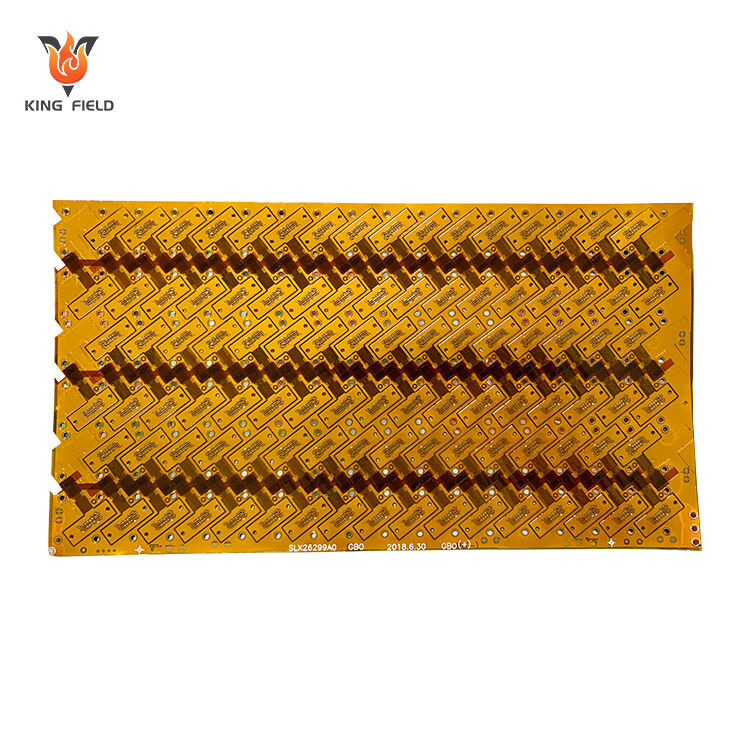
Flexible printed circuit boards (FPCs) are now considered vital in various electronic manufacturing sectors due to their light weight, compactness, and flexibility without circuit damage. This is the reason they have been adopted extensively in wearable devices, medical equipment, automotive electronics, and other consumer electronics. However, soldering of FPC materials present quite a different challenge compared to soldering of traditional rigid circuit boards. To keep the products reliable and performant, manufacturers need to carry out specialized processes and employ handling techniques.
Heat Sensitivity of Flexible Materials
The problems flexible PCBs encounter most of the time during soldering is exposure to a high level of heat. Actually, most of the time, flexible PCBs are using polyimide or polyester for their substrates which, generally, are thinner and more heat sensitive than the very common FR-4 material in rigid circuit boards.
For example, excessive heat can cause a variety of problems at soldering such as:
- Plastic deformation of substrate
- Unzipping of the layers of the board
- Damage of the adhesive materials
- Warping of the flexible circuit
As the flexible PCBs are not solid and thick like the traditional ones, they would not be able to properly dissipate heat. Hence, accurate temperature control becomes a really must.
To do so, firms like King Field depend on reflow profiles that are finely adjusted and temperature monitoring systems that prevent the product from overheating while still permitting the creation of good solder joints.
Mechanical Instability During Soldering
Apart from heat, mechanical weakness pose a problem when soldering flexible PCB materials. As rigid boards continue to be flat throughout the assembly process and are very easy to solder, the flexible ones, however, can bend, twist, or even move out of the original position during soldering.
Different problems in the production could then be:
- Misalignment of components
- Uneven solder joints
- Difficulty in automated assembly
- Reduced soldering accuracy
The use of carrier boards or stiffeners during assembly is probably the most common method a manufacturer handles the problem. In this way, during soldering, the flexible PCB is held in a flat position, which makes accurate placement and consistent solder connections possible.
Besides, King Field employs special tools and fixtures, designed to keep flexible circuits in place during soldering without affecting assembly reliability.
Component Stress and Solder Joint Reliability
One of the main concerns arising from some flexible PCB assemblies using the bending feature in their function, is mechanical stress caused to solder joints, as they are used time and time again flexing the soldered areas of the components to the board. This is a real concern with soldering flexible PCB assemblies that are made for dynamic or changing environments, such as wearable electronics or automotive systems.
This is what continuous bending can do to the solder joints:
- Micro-cracking of solder joints
- Loss of components
- Electrical discontinuity
Manufacturer, for example, King Field looks very closely at the design of the solder joints and the component layout as two factors which can reduce the amount of stress put on the solder joints and at the same time ensure their reliability in time.
Surface Oxidation and Contamination
Another issue flexible PCB materials can suffer from when being soldered is the surface oxidation. Such flexible PCBs have different surface finishes such as:
- ENIG (Electroless Nickel Immersion Gold)
- OSP (Organic Solderability Preservative)
- Immersion tin or silver
Contamination during the handling or the storage will be a cause for reduction in their solderability.
Improper wetting may lead to solder that is very weak and can cause bridging, incomplete connections, and weak solder joints.
Manufacturers have seriously implemented environmental control and cleaning processes strictly before soldering. Like King Field, they have quality control procedures to bring about clean flexible PCB surfaces for soldering throughout production.
Handling and Damage Risk
Due to being thin and fragile compared to rigid boards, flexible PCBs can be damaged very easily even unintentionally during soldering. Actually, when mishandled, it can result in:
- Creasing or cracking the substrate
- Damage to the copper traces
- Deterioration of the solder pads
Strict handling procedures are a must especially during soldering to be followed by operators and technicians. Besides, robots that are part of the production line might be reconfigured so as to also consider the fragile nature of flexible circuits.
Handling procedures clearly laid out and operator training are the main features of the flexible PCB manufacturing process at King Field.
Complex Multilayer Structures
In the era of advancement of electronics, there are so many multilayer flexible PCBs for which it has the possibility to include more features, however, soldering multilayer flexible PCB is also one of the new issues that come with multilayer flexible PCB after soldering:
- Heat not evenly distributed
- Higher risk of the board separation into layers
- Internal stress between layers.
Since multilayer structure itself is very complicated, excellent process controls and the best materials are absolutely needed so that the structural integrity of the board
Will not be affected during the soldering.
Since the beginning, King Field has not only put great effort into mastering materials and production processes for flexible circuit boards but also kept emphasizing constant improvement of their methods to maximize reliability of the soldering processes for complex flexible circuit designs.
Design Limitations Affecting Soldering
In fact, proper soldering flexible PCB assemblies is not just a procedure step; it actually starts with proper design. Only the correct design approach is able to make the job of soldering engineer both simple and comfortable.
Choosing pad size and spacing
Routing the trace near the area where bending is going to be done
Moving the components placement out of flex zones
Using a stiffener for the large component(s)
Engineer hand or no hand, the consideration of these design stage factors determines the amount of quality soldering and the overall product durability achievable.
King Field manufacturers are famous among clients as an excellent team that works with the client in order to make sure that the flexible PCB layout is done in such a way as to facilitate efficient and reliable soldering processes.
Conclusion
Flexible PCBs are a kind of printed circuit board that could completely change the appearances and the functioning of electronic devices. They allow for drastically smaller and highly flexible device designs. However, soldering techniques for flexible PCB materials have been developed quite differently from those used for rigid boards and thus present quite a different set of problems demanding special skills, careful treatment, and tight process controls. The main problems are the material's heat sensitivity, mechanical instability, solder joint reliability, surface contamination, handling risks, multilayer complexity, and design limitations. In addition to seeking expert manufacturers, modern production equipment and the best soldering methods are also necessary for overcoming these issues.
King Field has exceptionally good knowledge of flexible circuit production and assembly. Therefore, it is not only capable of providing the flexible PCB solution with high quality but also can accompany the clients at any step of their journey through the rapidly evolving electronics industry. The company has always stuck to the highest quality standards while intensively developing product innovation and has thus always been capable of delivering reliable flexible PCB projects along with sustainability in the long run.
In the next years until flexible electronics become more and more developed, it is going to be the most essential thing for manufacturers of flexible PCB materials to be proficient in both art and science of soldering these materials if they want to produce the best new electronic products.