
 EN
EN
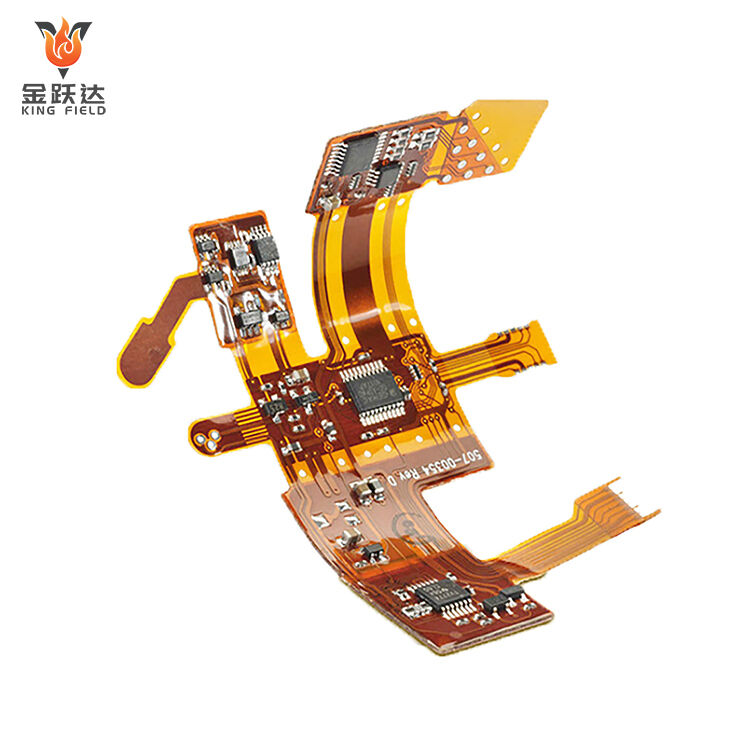
Nowadays, electronic devices are shrinking in size while at the same time expecting to deliver higher performance and reliability. Examples of the constant challenges faced by engineers in this regard include wearable technology, medical devices, and aerospace instrumentation. One of the solutions that have been introduced and proven to be very effective is the flex harness PCB. King Field has been engaged in designing and manufacturing high-quality flex PCBs that can satisfy the needs of extremely small space applications for a long time.
Understanding Flex Harness PCBs
Flex harness PCB refers to a flexible printed circuit board that is able to bend, fold and twist while the electrical connectivity remains intact. In contrast to conventional rigid PCBs, a flex harness PCB can be incorporated into the oddest spaces within a device. They are basically thin, flexible substrates with conductive traces, usually made of copper, and the whole thing is covered with insulating materials to ensure durability. The flexibility offered by this technology enables the design of complicated electronic systems without the designers being restricted by the shape of the rigid boards.
Advantages of Flex Harness PCBs in Tight Spaces
- Optimizes Space Efficiency Over and above anything else, a flex harness PCB is especially beneficial because it can fit and conform to complex 3D structures. In a packed electronic product, usual wiring or rigid boards could be very inconvenient and also pose a risk of mechanical failure. On the other hand, flex harness PCBs can be bent or twisted to be placed in corners, small cavities or even be run on different planes thus the internal space of the device can be fully used. This is the kind of feature that is of highest importance in medical implants, drones, and aerospace applications where space is very limited.
- Improved Reliability and Signal Integrity There are a lot of operations in the traditional wiring harnesses which involve multiple solder joints, connectors and interconnecting cables. All these components, each individually, represent potential points of failure. When you use Flex harness PCBs, you are diminishing the need for such connectors hence you will have fewer points of failure and the overall reliability will be better. Furthermore, the specific layout of the traces in a flex PCB lessens the possibility of signal interference thus the signal integrity is kept at a high level even in high-frequency applications. At King Field, we use exacting design techniques so that our flex harness PCBs can always provide the desired electrical performance even under the most challenging conditions.
- Less Weight Taking into consideration all the different applications, weight is one of the most critical factors especially when it comes to portable electronic devices or aerospace systems. The flex harness PCBs are much lighter compared to traditional wiring harnesses because they get rid of the need for cables and connectors which occupy a lot of space and add a lot of weight. This weight saving not only facilitates the portability of the gadget but can also lead to better energy efficiency and enhanced operational performance especially in the case of battery-operated devices and unmanned aerial vehicles.
- Easier Assembly and Maintenance By bringing together all the connections into a single flexible element, Flex harness PCBs not only make the assembly process faster but also reduce the risk of errors in the assembly and make the subsequent maintenance less complicated. Moreover, products that are created using these PCBs are able to withstand higher mechanical loads due to the flex circuits being able to dampen vibrations and movements that would otherwise cause damage to conventional wiring or rigid boards.
The Multi-Industry Use of Flex Harness PCBs
Wherever you look, flex harness PCBs are revolutionizing the game in one industry after another. To give examples, in the healthcare sector, these flexible PCBs have made it possible to produce compact and lightweight hearing aids, pacemakers, and other diagnostic instruments. In the automotive sector, they have been integrated with such systems as ADAS, car infotainment systems, and EV battery management modules both. Zn-foldable consumer electronics rely very much on the use of flex PCBs for sleek and comfortable designs without compromising the performance.
The Art of Flex Harness PCB Solutions by King Field
Having been locked up and focused on the production of king-quality flex harness PCBs for tightly spaced applications, the expertise of King Field is well proven. By blending laser-material selection, pinpoint fabrication and thorough quality control, our engineers produce flexible circuits that comply with the highest standards of the industries. We maintain close cooperation with our customers during both the prototyping and the mass manufacturing stages to guarantee that the designs are optimized and will be reliable, durable, and capable of excellent electrical performance.
Besides that, we appreciate that each project is a special case in terms of spatial limitations and functional requirements. Our R&D personnel is always ready to help with the design so that the flex harness PCB will perfectly fit into your product concept thus shortening the time of development and increasing the life of the product. Thanks to a solid track record of success in a broad range of industries from healthcare to automotive, King Field is synonymous with the highest quality in the flexible PCB field.
Summary
The trend of miniaturization in electronics coupled with the increasing demand for high-performance devices is the driving force behind the innovation of flex harness PCBs. Furthermore, by using flex harness PCBs, the engineers can efficiently utilize the space in devices, enhance the reliability, perform the weight reduction, and simplify the assembly thus fundamentally changing the way they think about intricate electronic designs. Consumer electronics, medical devices, and aerospace are only a few examples of different sectors where these flexible circuits are offering unique benefits especially for tight-space connectivity.
Thanks to King Field’s knowledge and dedication to quality, company clients are at an advantage to use the flex harness PCB technology in order to accomplish greater design efficiency and product performance. As the device industry keeps evolving towards smaller and higher-performing devices, it is no longer a question of if but rather when these companies will use flex harness PCBs in order to gain an edge in a highly competitive market.