
 EN
EN
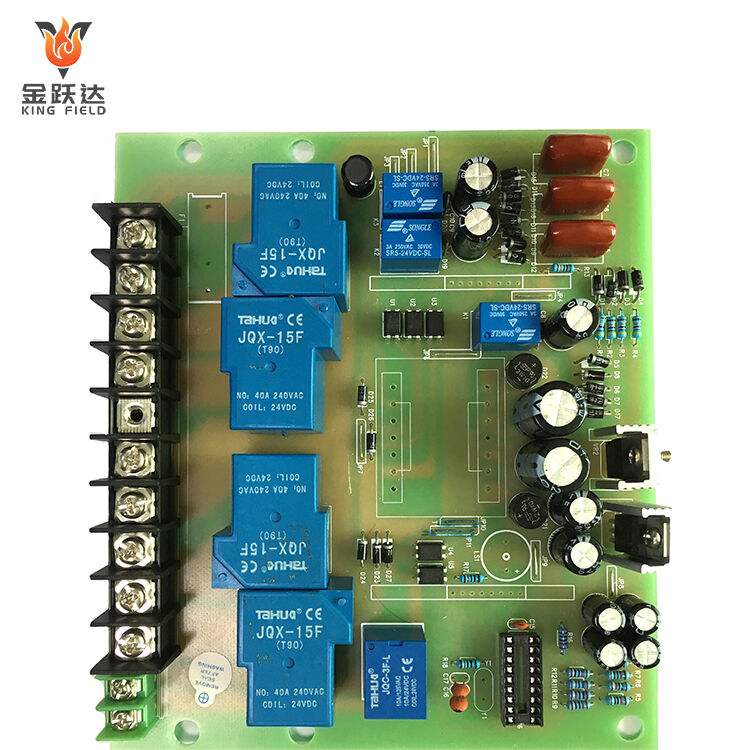
Today, the electronics industry is changing at such a high pace that even your PCB design process efficiency can become a decisive factor for your product development time, cost, and level of quality. King Field-type businesses have recognized the necessity of employing up-to-date design toolsets to elevate their electronic product development efficiency. Out of these tools, Altium Designer PCB design is singled out as a versatile solution that can not only help you with your work but also deepen your collaboration and product reliability. Let us consider how Altium Designer PCB design can revolutionize your electronic product development.
Simplified Workflow Due to a Single Environment
In the past, PCB design was a process using multiple tools - schematic capture, layout, simulation, and component management - which created a disjointed workflow. Altium Designer PCB design is a single platform that combines all necessary functions of design in one place thus providing a tightly integrated suite of tools. Hence, engineers can, for instance, carry out schematic capture and then immediately do PCB layout, all this without a tool change or file format change, thus avoiding mistakes and getting more work done. For a company like King Field, this integration ensures that design iterations become quicker and more reliable, thereby facilitating product development at a faster pace.
Improved Collaboration Between Teams
Nowadays, electronic products entail contributions from various teams, such as hardware engineers, software developers, and manufacturing specialists. Facilitating extension of the workforce collaboration to remotely working teams and stakeholders is the aim of Altium Designer tool. With functionalities like version control, cloud-based design sharing, and annotation tools, the communication is hardly ever a problem. King Field has stayed ahead in the game by utilizing the collaborative features and functionalities to cut down on design bottlenecks and efficiently incorporate the best of each team’s input into the final PCB design.
Effective Components Management through Smart Libraries
Component management is a key factor not only in ensuring design correctness but also in controlling costs. By providing smart component libraries along with lifecycle management tools, Altium Designer makes tasks like component selection, footprint matching, and sourcing a breeze. Designers get to use a huge library of verified components so the parts they choose will meet their design requirements. King Field engineering teams, by using this, have significantly reduced their component sourcing errors and still managed to bring their products to market faster because they did not have to waste time verifying each component manually—they just used trusted libraries.
Precise Design Rules and Constraints Management
Among the many things that distinguish using Altium Designer PCB design is its comprehensive rules engine, which is capable of controlling electrical, mechanical, and manufacturing allocations of a design. Such design rules help in sustaining telecom signal quality, handling the heat loss, and making the product easy to fabricate right from the start, which inevitably translates to fewer changes, thus less cost. Allowing their design to meet all pre-set quality standards by tightly regulating the design constraints is how King Field not only achieves consistently top-notch PCBs but also cuts the risk of manufacturing issues like signal crosstalk or heat buildup.
Integration of Simulation and Validation
Altium Designer also contains simulation and validation tools that allow engineers to pre-emptively assess circuit behavior in a virtual environment before making a physical prototype. By conducting signal integrity analysis, thermal simulations, and real-time 3D visualization, designers gain in-depth knowledge of the areas which are prone to errors. This way, King Field is able to lower its cost of fixing by getting rid of the root causes at an early stage and thus also the time span between concept-to-market is radically shortened through them. In addition to that, by operating under the different possible scenarios, the designers ascertain that their electronic devices are going to give their best performance in the actual world.
From Prototype to Manufacturing with Less Hassle
It often takes extra time to get a PCB manufacturing-ready by preparing correct product files and checking that the design is compliant with specs. One of Altium Designer’s applications streamlining the manufacturing preparation step is an automated output generation that includes Gerber files, assembly drawings, and bill of materials (BOMs). It helps lower manual work and human error, which makes the task easier for manufacturers to accurately and efficiently produce. King Field reveals that this quality of their work not only has allowed them to shorten prototype cycles but also to have a smoother collaboration with contract manufacturers so as to produce functional and market-ready products faster and with certainty.
Linking PLM and ERP with the Design
Big companies that have a PCB design process still need to connect their design data with their enterprise systems such as PLM (Product Lifecycle Management) and ERP (Enterprise Resource Planning) to make sure that their whole flow from design to production is smooth and feasible. With the help of Altium Designer, it is possible to accomplish such integrations and hence have the design data go smoothly for production planning, inventory management, and cost tracking. By having the PCB design linked to the rest of the business operation, King Field’s product development is in perfect harmony with the overall plan thereby eliminating delays and extra costs.
Conclusion
Electronics is a highly competitive sector where the question is not anymore whether you should change your PCB design workflows but how fast you can do so. In product development efficiency, one of the main contributions comes from using the right design tools and Altium Designer PCB design is no exception. A myriad of things such as unified design environments, intelligent component management, advanced simulation, and manufacturing preparation are some of the advanced features that the tool is packed with thus helping engineers to deliver high-quality electronic products faster and more reliably. To sum up, King Field is a prime example of a company that knows the strategic advantage of using the leading-edge PCB design tool.
By embracing Altium Designer, companies will be able to remodel their entire electronic product development process, cut down on errors, and gain the acceleration in product development that they so much need in order to stay ahead. Irrespective of your size - being a tight-knit group of product designers or a large-scale industry - using Altium Designer for your PCB design is a well-thought-out decision in your journey to be an unconquerable force in electronic product development.
Table of Contents
- Simplified Workflow Due to a Single Environment
- Improved Collaboration Between Teams
- Effective Components Management through Smart Libraries
- Precise Design Rules and Constraints Management
- Integration of Simulation and Validation
- From Prototype to Manufacturing with Less Hassle
- Linking PLM and ERP with the Design
- Conclusion